On the drive north from Nairobi into upper Meru, the changing scenery paints a bleak picture. Thick greenery gradually grows sparser, the color bleaching away into dirt and dust. Drooping with the weight of dull and thirsty leaves, the stubborn trees that have survived seem tired, listless.
East Africa is facing the worst drought in 60 years, according to Oxfam. In Kenya, the estimated food insecure population is 3.5 million as of July 2011. Of that number, UNICEF reports an estimated 385,000 children to be acutely malnourished.
While media attention and government aid remain primarily focused on north Kenya, where the drought is most extreme, other semi-arid regions in Kenya such as Meru have also been severely impacted. In north Meru, the situation is dire; the region has been suffering from drought for years. Out of a population of 44,000, the community has faced five deaths from starvation within the past month.
Taking Action
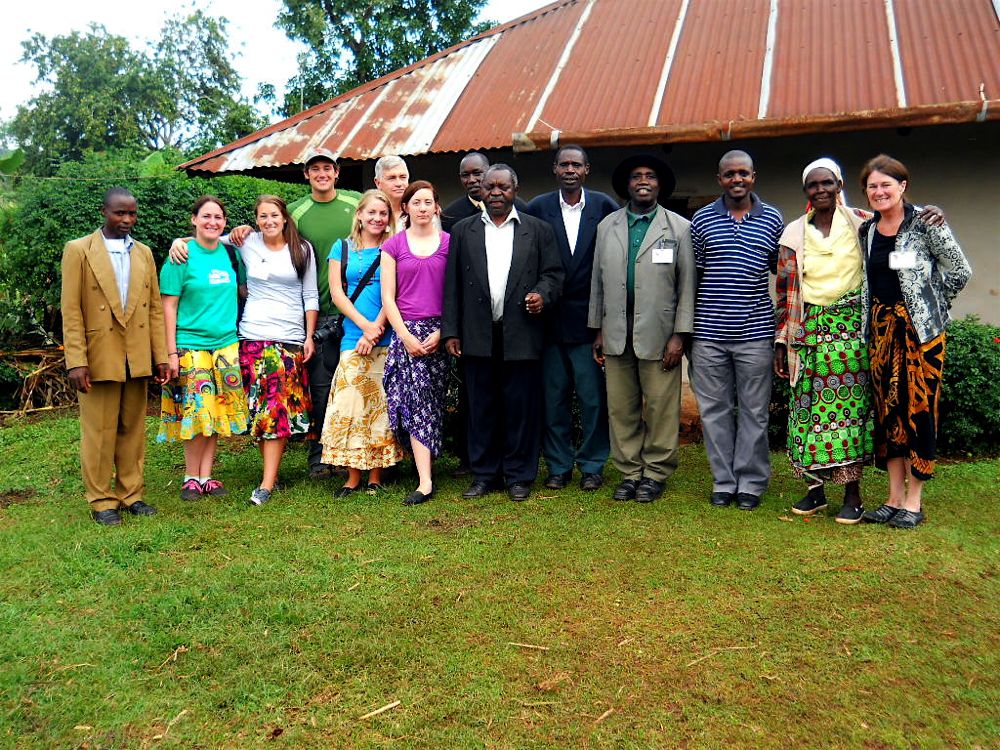
In response to this crisis, HEART appealed to friends and contacts in the U.S. for donations, and the resulting $4,000 in contributions enabled us to purchase 800 packs of maize flour (5 kg each) and 10 bags of beans (100 kg each) for Meru. This past Sunday, a team from HEART including myself and several others drove the six hours north to upper Meru to distribute this food to the community.
“We’ve had a climate change for three years, and we haven’t harvested any crops,” explained Pastor Joshua Mberia, the KFS Area Coordinator in Meru, when we arrived. “So the areas are very dry and starving. It is affecting everybody in this area – we are going without food.”
While southern Meru has food and water, northern Meru continues to face a harsh existence in which eating once a day is a luxury for most families. There are no streams or rivers, and any attempts by the government or other organizations to drill boreholes have failed – the water lurks deep.
The community survives mainly by growing and selling miraa, a plant that, when chewed, acts as an amphetamine-like stimulant. Most other crops are not hardy enough to survive the current conditions. Water must be purchased and transported from other areas for four to six times the price it would cost Nairobi – a price most cannot afford. And so they go without.
The Only Source of Aid
With the lack of aid coming to the community, Pastor Mberia told us that HEART has become the single source of emergency assistance for the people. This trip marked the third such food distribution HEART has conducted in the area (one each year since 2009).
Since its mission is disease prevention education, HEART does not have an official food distribution program, though it does build greenhouses in some communities as a source of food and income. But after receiving personal appeals from the local committee that coordinates HEART’s Kids For School (KFS) project in Meru, HEART staff determined that an exception must be made. (HEART assisted this group to form as an official community-based organization in 2006, when the KFS program began.)
The KFS project currently enables 150 kids from 106 households in Meru to attend school – but how could these kids go to school when they were starving?
“Schools were opening, but children were sent home because they had no food,” explained Mzee.
To address this problem, on Sept. 4 we distributed the donated flour and beans to those 106 households containing children enrolled in the KFS program, providing for a total of 455 kids (KFS children plus their siblings). The remaining food was distributing among the most needy people in the community.
“Your cry—we hear it,” Mzee told the crowd waiting to receive the food. “Your pain is our pain.”
As we scooped beans and dropped packs of flour into the canvas bags brought by the guardians of the KFS kids, beamed from many faces – both providers and receivers. Now, these families would have food for at least a little while longer.
“We have been suffering for long. For the period of the last three years we have not harvested anything,” announced the Chief of the community. “Today we are hungry, but tomorrow we will be satisfied.”
Unfortunately, not everyone was smiling. Though the families were grateful enough to sing songs and present poetry and dances in thanks, this assistance was like a drop of water in a sea of suffering. The food delivered by HEART would last approximately 1-2 weeks – and then they would be hungry again. And it was not enough to feed the hundreds of additional people who flocked to the distribution site, hoping to receive a portion of the food. They watched us from the sidelines, faces blank, eyes hungry.
Sustainable Solution Needed
HEART has done what it can, but as the drought and famine continue, the need remains urgent. School has resumed session, but as the food runs out and kids are unable to eat, the classrooms grow empty.
“This distribution will last for some weeks, and then it will be finished and the problem will repeat,” said Pastor Mberia. “I am worried because I don’t know what will happen. This food that has come – I don’t know how it will feed the children for three months [during the school session].”
Members of the Kabachi KFS Committee have reported incidents of children eating poisonous wild fruits because they are hungry, or skipping school to sell firewood. “If you wake up in the morning, you can see small children carrying grass to sell to buy food,” said William Nkunja, the committee treasurer.
So why has it come to this? According to UNICEF, the famine in East Africa is the result of years of drought due to climate change, skyrocketing prices of food and fuel, and the trap of exclusion and poverty for communities such as Meru.
Meru community leaders have attempted to think of ideas for sustainable solutions to the food and water problem, such as drilling boreholes or setting up water storage tanks to collect rain. Unfortunately, north Meru’s unique situation seems to present obstacles at every turn: a lack of any rivers, a water table too deep beneath the ground, the people’s traditional dependence on agriculture, and lack of funds to support projects or business ideas.
“The nature of human beings is to forget things,” said Pastor Mberia. “Every time there is drought and we get food, we forget ideas, because we don’t have resources to support those ideas.”
For now, Meru is depending on emergency assistance, and any little bit helps. Even one bag of flour can keep a child alive for another week.
“The aid we have now received from HEART is very vital to us,” said John Mugaa, secretary of the local KFS committee. “We have tried many different ways of providing food, but this is the only successful way. We are very thankful for what HEART has done for us and we are praying for more aid.”