Showing posts with label Africa. Show all posts

Tuesday, February 17, 2015

20 Funny Experiences in Senegal as a Peace Corps Volunteer

After two years living in Senegal, I’ve grown very affectionate of this land of paradoxes.

Here, hot tea is considered a must on the hottest days, Muslims dress up as Santa on Christmas, thatched huts stand next to concrete buildings, donkeys plod behind cars in the streets, and you find yourself the recipient of long phone calls in which absolutely nothing is said. Time is relative, greetings are important, and people love a toubab (foreigner) who can take a joke. Here are some of my funniest memories!
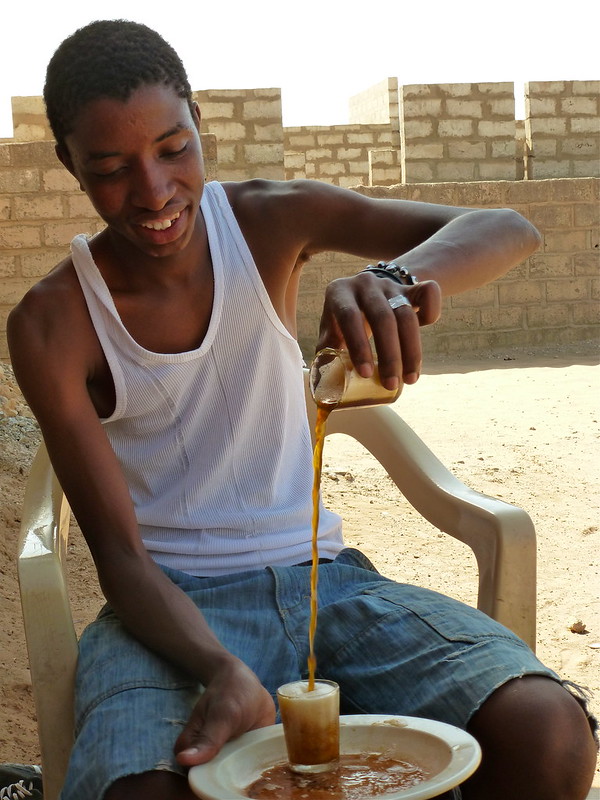
P1000336
Hot tea on a hot day.... always!

1.  Waking up one morning to see my host family across the street, tossing sheep over a wall. I watched as my host mother grabbed the sheep by the horns and passed them up to my host brother on top of the wall, who chucked them over. (Sheep are the most beloved of Senegalese animals, and apparently the grass was better on the other side... literally...) The sheep also get baths in the morning sometimes.
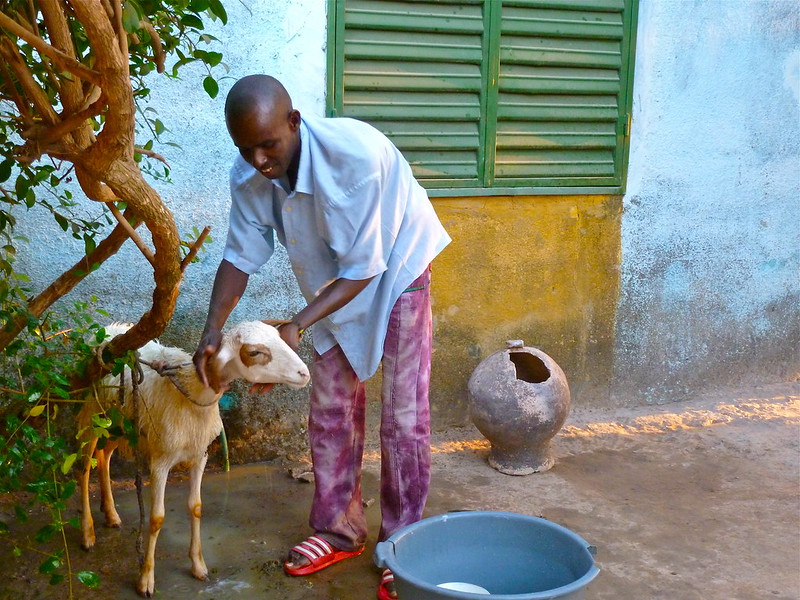
P1020442
My uncle takes good care of our sheep.

2.  When I noticed myself telling people that meetings start an hour before they actually do – so that everyone will be there on time. This is common practice among Senegalese development workers, who know their own people well... It took me a bit longer to adopt this strategy, but trust me, it works!

3.  Emerging from a nap in my hut one day to hear my host mother proclaiming she had found a husband for me. Surprise! His name was Abdourahmane, she said. He came by and promised her money, fabric, sheep and goats for my hand in marriage, she said. How could she say no? (She made all this up, of course. This is why I love her.)
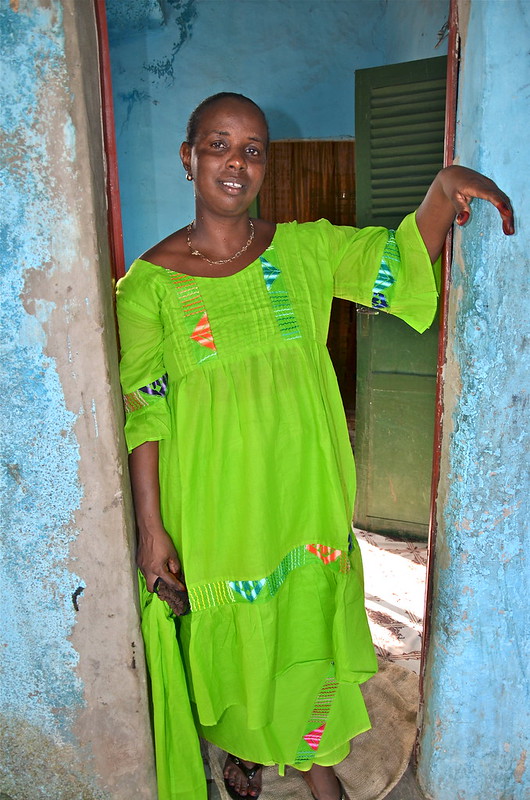
DSC_1136
Mariama, my host mother

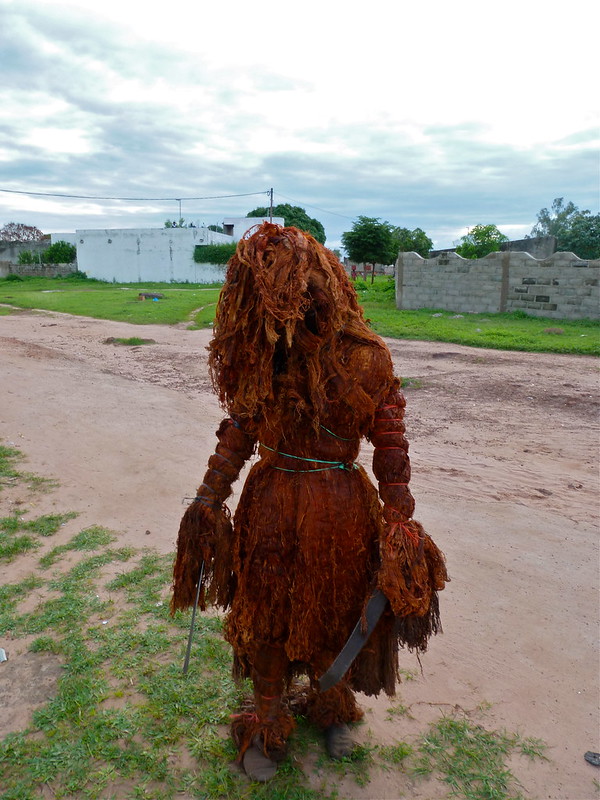
4.  Running from the Kankurang. This raggedy carpet-like creature comes out during the rainy season in Senegal’s Casamance region, marking the time of the initiatory rite of circumcision for young boys. His costume is made from bark, leaves, red tree fibre, and vegetable dye. The Kankurang runs around town clanging machetes together, shrieking eerily, and chasing people. Sometimes he smacks unlucky individuals with the flat of the machete.
P1010569
The Kankurang!

P1010566
My host sister is scared of the Kankurang, so she and I always hide when we see him coming.

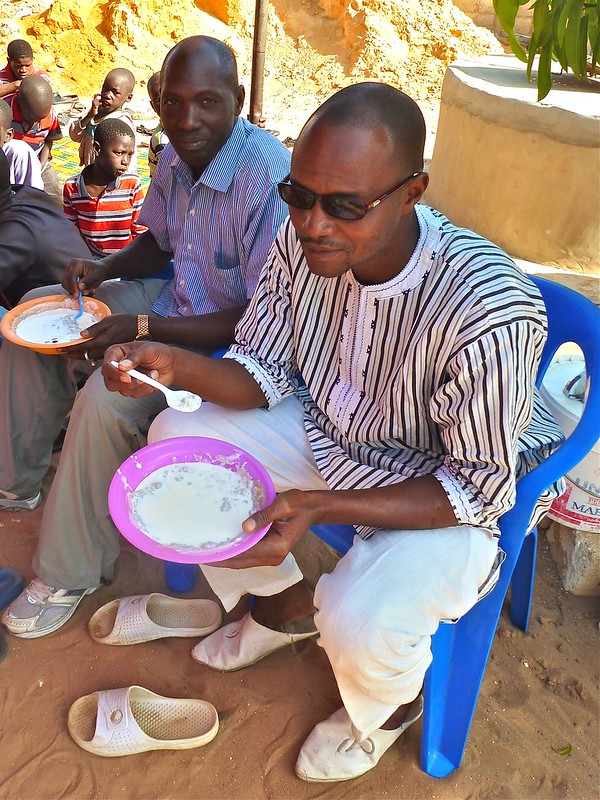
5.  The many quotes and words of wisdom from Samba Kandé, my Pulaar language teacher. Regarding weekend fever: “Friday I have many water in my head. I am thinking about the weekend.” Regarding the important things in life: “I love this place. We have many shade and many mangos.”
P1000394 - Version 2
Samba Kandé, my Pulaar teacher, being a boss. (Eating kossam - sour milk - and couscous, a local dessert.)

6.  Receiving this invitation via text message at night from a Senegalese friend: “Hey, I’m going to go buy a goat. If you’re free would you like to accompany me?” (...There is so much to do in Kolda.)

7.  Watching chickens escape one by one from a cardboard box at the Gambia River crossing, to the chagrin of their owner. I sat back and enjoyed the show as the entire mass of people in the near vicinity attempted to catch them. Why not help, you ask? Have you ever tried to catch a chicken?

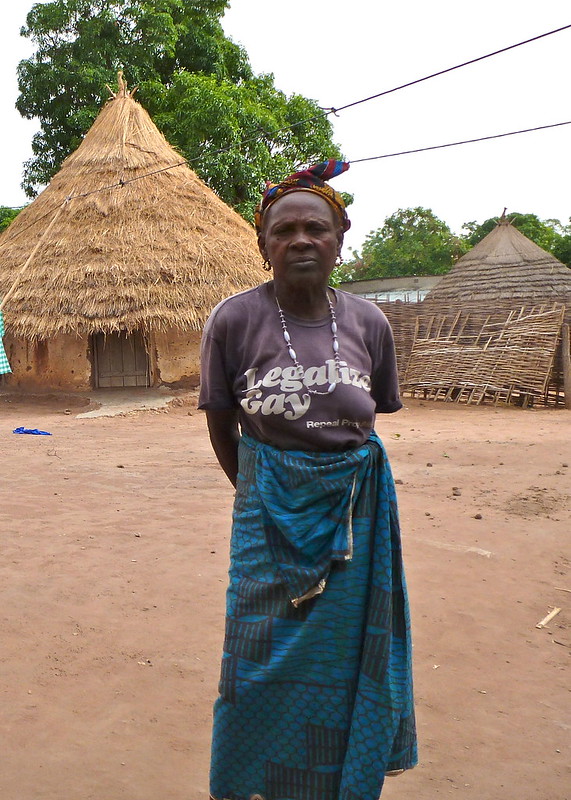
8.  The secondhand American t-shirts people wear here in Senegal without any idea of what the words mean. Here is one I encountered in a Kolda village:
P1010044 - Version 2

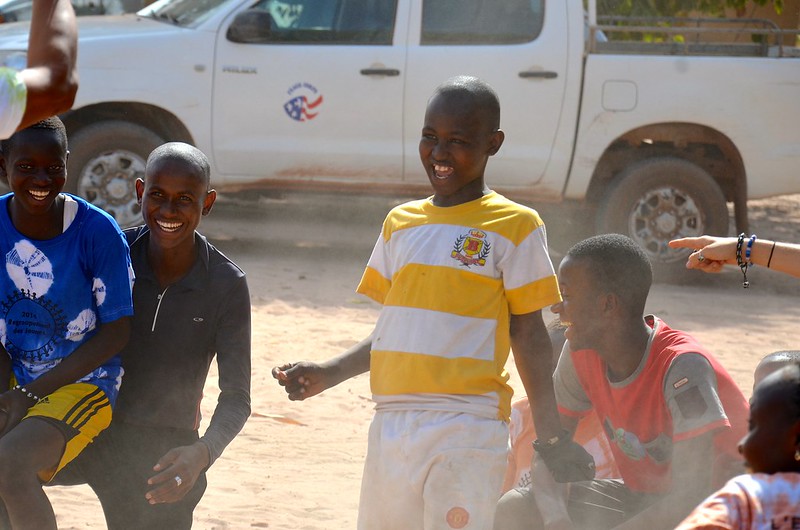
9.  When a kid in our Youth Empowerment Camp declared he was going to be President of Senegal some day, and of course he would make all the Diallos ministers. In Senegal nearly everyone is descended from one of 20 or so family groups, which means heated and humorous debates over which family group is better. For instance, my host family members are Baldés, so we know that all Diallos and Kandés are troublemakers and thieves!
DSC_3176
The future President of Senegal at Kolda Youth Camp

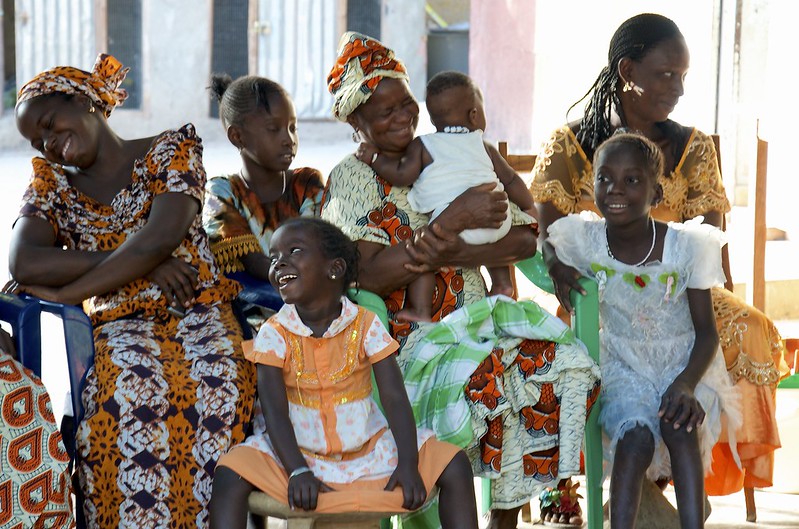
10.  Becoming fluent in the rapid volley of joking insults Senegalese people love to dish out in local languages when they find you’re from a competing family group. “You’re a frog / bean-eater / donkey! You steal everything! You probably stole those clothes you’re wearing, didn’t you?” (All said with huge, beaming smiles.)
DSC_1548


11.  Drinking undiluted ginger juice for the first time. Never tried it? Imagine drinking liquid wasabi. This is a favorite drink in Senegal along with bissap (hibiscus) and bouye (baobab fruit) juice.

12.  The romantic overtures of Senegalese men have to make it to this list. The first time my ladies and I were called “les belles gazelles,” we were very confused. (Better to be a beautiful gazelle than a beautiful hippo, I suppose.) There are offers of marriage the instant we hop into a taxi or conduct any kind of shopping transaction. And let’s not get into those novel-length love poems sent as text messages.

13.  When I reached out to greet a friend and promptly fell off my bike into a sand pit. It kind of happened in slow motion - I could not be saved.

14.  The moment I realized I no longer expect the Director of any organization to ever actually be in his office, or available, when I come by. Here’s a conversation I overheard in the Kolda Inspection d’Académie to illustrate this (translated from French):

Visitor: “Good afternoon, is the Director here?”
Secretary: “No, he’s out.”
Visitor: “But he will return, right?”
Secretary: “Yes… in theory.”

15.  Taking attendance for my English class and asking a guy three times if his last name really was Maaro, which means “rice” in Pulaar. It was.

16.  Mice eating my Nutella—lid, label, chocolate and all— when I naively left the jar on a shelf in my hut while I was on vacation. It was a sad day for chocolate. Even sadder when none of my American friends back home believed me! (Living in a thatched hut guarantees you will have rodent roommates.)

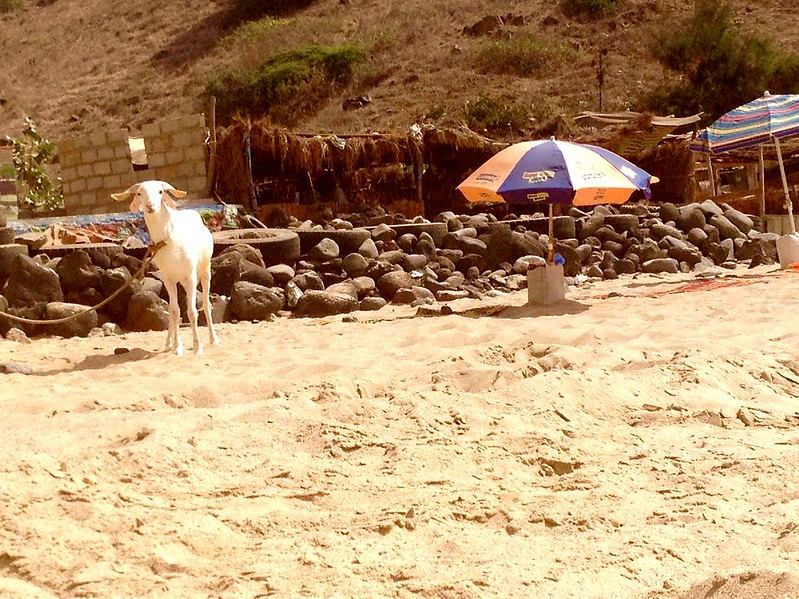
17.  Watching a Senegalese man frolic with his pet sheep on the beach in Dakar, exactly as if it were a dog. They jumped around, played catch with a ball, and went for a swim.
FullSizeRender.1 - Version 2
This is the very sheep - on Mamelles Beach in Dakar

18.  Lying on top of the well stargazing one night at my first host family’s house in Mbour. Everybody laughed long and hard at the weird thing this toubab was doing now. Twenty minutes later, all my host sisters had joined me on the well!

19.  The constant sight of live goats, sheep, and chickens tied to the top of buses and the backs of motorcycles, eyes bugging out of their heads, hollering like there’s no tomorrow. I mean, how else would you transport your animals? (Don’t answer that.) I’m so used to the cacophony of animal sounds that I often don’t notice until I’m about to board the bus. Then I look up and see a row of sheep heads staring down at me.

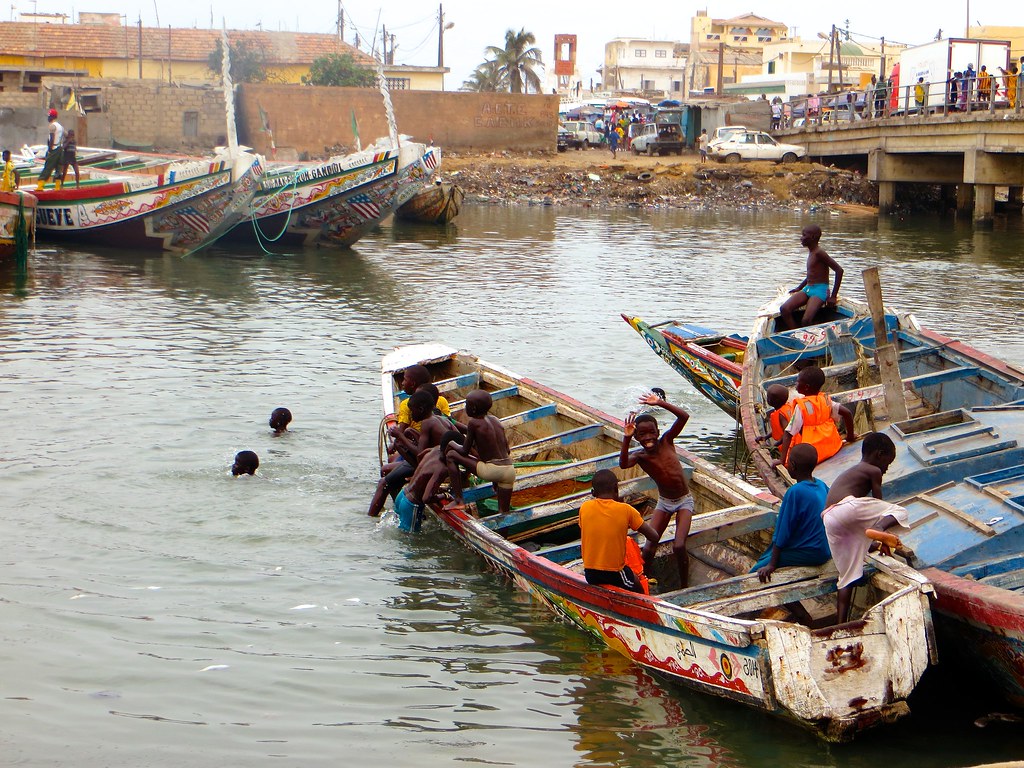
20.  Collecting an entourage of children chanting my local name (“Aissatou!”) during my visit to a big daara (Koranic school) in Kolda. Peace Corps may be a tough life at times, but at least we get local celebrity status! Here’s the proof:

IMG_2617
Senegalese kids are awesome.

Friday, December 12, 2014

How to React to Talibés: 7 Tips for Peace Corps Volunteers

Talibé children in Senegal and the flood of issues connected to them – from health to human rights and child protection – have become my world for the past year and a half. I almost can’t even remember what it was like to first arrive in country and see these scruffy kids everywhere with their begging bowls. It’s hard to remember how much research I had to do and how many visits I had to make to daaras* in Kolda before the complexities of the talibé system really sunk in. And there’s always more to learn.

From the beginning, I felt that many talibés were being exploited, forced to beg for change on the streets to “support” their marabout (Quranic teacher) and his daara. I didn’t understand why a society could allow this, though. And I didn’t know if this was a facet of the culture I was supposed to respectfully ignore – or if many Senegalese actually felt the way I felt.

I can now answer that question: yes, many do feel the same way. But “Africans don’t have the culture of denunciation,” a radio journalist in Kolda explained to me once. Layers of tradition, respect for religious leaders, and poverty have prevented most people from speaking out for many years. That is changing now, little by little.

The hardest part for me now is to remember how I used to feel about talibés, these sometimes sweet and sometimes abrasive, world-weary boys roaming the streets. But when I read back through my old journals, I remember: I was intimidated, overwhelmed and a little frustrated. I didn’t know what to think about these kids because I didn’t understand the whole system – but they wouldn’t leave me alone, and they were making my transition into this new culture even harder.

It wasn’t until I sat through a presentation by former PCV (and talibé guru) Hadiel Mohamed a few months into my service in early 2013, and then followed up by pestering her with a million questions, that I understood how to look at the issue and how to keep my compassion front and center when dealing with them. Now by working with SeneGAD**, I’m hoping to pass that perspective on to as many people as possible, because honestly: it doesn’t come naturally. I still have to work at it every day.

Abrasive or confrontational kids getting up in your space will inspire negative feelings or reactions if you don’t train yourself. And that’s okay – you just have to recognize why you’re feeling these things and know what to do.

So how do you train yourself to look at talibé kid with a different mentality? How should we react?


Here are 7 tips on how to act around talibés:

1.  Remind yourself, when you see them, that these kids have had an extremely hard childhood. They’ve been treated differently from other kids and exploited – sometimes abused – since age 4 or 5. They are children forced into the role of adults, finding food and caring for themselves. They are often uneducated and their future might look pretty bleak. Whatever attitude they project at you is a defense mechanism they’ve learned to survive a very harsh life.

2.  If you feel angry or annoyed at what these boys say or do to you, try to redirect your anger towards the system and the adults who have put them into this life and made them act this way. Use that anger as fuel towards building projects that can help. It’s not the fault of the children.

3.  The best response to a talibé’s demand for money is to greet him. Remind him that you’re a person, he’s a person. Shake his hand, ask his name and where he’s from.

4.  If a talibé keeps asking for money and you don’t want to give, here are some things you can say: “Sorry, I don’t have change.” Or “Next time, inshallah!” If you want to make a joke out of it, you can add something like, “Sorry man, I’m really not ‘noosing’ these days… Times are rough!” (Noos is a Wolof and Pulaar expression meaning having fun and having money.) Phrasing things this way won’t harm anyone and will make talibé feel acknowledged. Simply saying “no” without explanation is not how the culture works here. These kids won’t understand your deeper motivations behind this – they’ll just assume you are stingy, rude, or don’t care about them.

5.  See a big pack of talibés coming your way? This used to intimidate me and I’d try to avoid it, but now I try to look at is as another chance to remind them that we don’t think they’re invisible or distasteful. Give them a smile and a greeting, or at least a wave and eye contact, as you walk through. You don’t have to stop and be surrounded – that acknowledgement is enough.

6.  If a talibé insults you or makes a joke at your expense, either ignore it or make a joke back. Getting angry will not result in behavior change.

7.  Give something (not money) once in a while! There are countless debates over whether it’s an act of compassion or simply “fuels a bad system” to give to talibés. After all this time working with them, I’ve decided that giving money should be avoided, since it often goes back to the marabout and does perpetuate the system. However, it’s good to give the kids other small things every now and then – fruit or other nutritious food, soap, sandals, etc. It can help them meet an immediate need, can make them happy for a little while, and can incline them to trust and like you.

Most importantly, remember these are at-risk kids, generally far away from their families and often lacking a mentor to guide them through life. Some marabouts fill that role, but others do not, teaching them to memorize the Quran and little else. Who knows what kind of impact you can have if you try?


*Daaras = schools where talibés live and study the Quran under tutelage of a marabout

**SeneGAD = Senegal’s Gender and Development group for Peace Corps Volunteers, focused on gender equality and youth empowerment

Sunday, November 9, 2014

City or Village Life: Which Would You Choose?

While there are definitely stereotypes associated with Peace Corps - some people imagine a hippie life on an island, or a hut deep in the jungle - the truth is that PCVs can end up in all kinds of different living situations around the world. You'll find us living in huts, houses, apartments, you name it. You can end up way out in the bush, five minutes from the beach, tucked away in a small town, or lost in a bustling metropolis. 

I can't say I wish I had been one of those Peace Corps Volunteers placed in a village. I’m happy being a small city volunteer in Kolda, Senegal, because it satisfies my inner drive to always be on the go. I can never be bored here, at least in a work sense! 

There are hundreds of people and dozens of organizations I could work with, which means endless project possibilities. I can work with talibés one day, then nutrition and moringa, than switch it up to a youth internship program - and I love that variety. Also, French is more useful in a city, where it is used in professional contexts. (Every-day conversations are usually conducted in local languages like Pulaar). I’ve loved being able to work in two languages.

My house! And my little host brother, Omar "Doctor" Baldé.
The well inside my family compound
Me with Double Horizon, a local youth group I work with sometimes.
Some health relays I work with in Kolda (we were doing door-to-door vaccinations for children)

Despite the perks, city life isn't all that golden. Unfortunately, Peace Corps Senegal doesn’t equip health volunteers as well for serving in cities. We come in expecting to live in remote villages, and that’s how we are trained and prepared. We learn about baby weighings, how to make nutritional porridges, how to implement well or latrine-building projects – all things relevant in villages, but less so in cities. Then, suddenly, a very few volunteers “luck out” (depends on your point of view) and get placed in small cities or road towns.

Sure, we get electricity and easier access to Internet. The downside is we have to pave our own way and navigate an overwhelming sea of people, trying to find our niche and be relevant and useful, with less guidance from Peace Corps. Big towns already have qualified Senegalese personnel running health and development projects. Duplicating their efforts is not a sustainable contribution. Reinforcing capacity is nice once in a while (like helping local health workers with their child vaccination campaigns), but it still doesn’t make a lasting impact.

Instead, it’s best to find your little niches – meeting the needs that are not already being met, or offer a unique approach to something. A few months into my service I finally started finding those niches, but it took a lot of research and questions to get there. If you're not careful, you can get lost in the city, swallowed up by existing projects and feeling like a needle in a haystack.

When I call Kolda a “city,” I should clarify: Kolda is nothing like Dakar, the capital, which teems over 1 million people living in both luxury and poverty. In Dakar, you can find smoothly paved streets, nightclubs, high-end restaurants (even sushi!), beautiful beaches, a modern shopping mall (where they are currently building a movie theatre), a giant stadium for Senegal’s soccer fan multitudes, art galleries, fashion shows, cafés, and air-conditioned stores with all kinds of imported products. We call these “toubab stores,” because really, only toubabs (foreigners) go there. Most Senegalese won’t be dropping 5,000 CFA ($10) for real ranch dressing or a box of Pop Tarts.

But in Dakar you will also find intense poverty, dusty dirt roads, trash on the streets, sheep and other animals roaming everywhere, open-air markets, donkeys pulling carts next to the sleekest cars, millions of small boutiques, and ragged talibé boys roaming the streets with their begging bowls.

Dakar 

Compared to big cities like Dakar and Thiès, Kolda is definitely more of a very small town. We have a few gas stations that offer products geared towards toubabs – shampoo, Nutella, Pringles, cereal – but not much. We are one of the southernmost regions in this country. You know you’re nearly the furthest you can get when there’s no ice cream to be found! In fact, many people don’t even know what it is, sadly. Though we have refrigerators and convenience stores, there’s no way to transport ice cream all the way down here without it melting.

The majority of Kolda’s population lives on the outskirts, not downtown, and many do not have electricity. Most people live in huts, or combinations of buildings and huts, arranged in a square or circle. This forms a family compound. In the middle of the compound is dirt ground, but they treat it like a floor, sweeping it smooth of debris and animal droppings. Most families also keep animals in the middle of their compound – usually goats, sheep, chickens, and cows. In the city, you may witness the weird dichotomy of a giant satellite dish next to a reclining cow or a bunch of sheep. (Welcome to my house!)

Just like anywhere in Senegal, whether village or city, you’ll find families in Kolda relaxing and socializing in front of their houses, drinking tea. Unfortunately, Jakarta taxi motorcycles buzz like flies – roar like lions would be more accurate – everywhere you go. True silence is rare. After a while, I realized I needed a break from it all.

My family compound, sheep, satellite and all.
Mix of buildings and huts in the city of Kolda
You still find random things like this in a Senegalese city... donkey carting soft drinks to a bar.
Kolda city school kids - - there's a LOT of them.
Inside another city house (Kolda).

Village Visit

Recently, a PCV friend of mine had been encouraging me to visit his village before he finished his service, and I finally found the time to do it. I’m so glad I did. It was just what I needed!

A small village just outside of the big city of Tambacounda (a 5 hour drive from Kolda), Botou breathes calmness in the way that cities never can, unless you’re on the coast and can chill ocean-side. It had been too long since I’d visited a village – I’d started to forget how peaceful and relaxing it can be out there.

In village, without realizing it, you fall into a slower rhythm. People take their time. What do they have to hurry to? I found myself sitting for hours, just talking, without getting antsy like I normally would. It was a miracle!

The beauty around me probably helped: clean air free of car exhaust and the growl of motorcycles, green and trees everywhere, rich gardens of tomatoes and cassava and hibiscus, fields of peanuts and corn and millet. The bush stretched out behind us in an endless expanse of scruffy grass and spindly trees, pierced here and there by massive baobab trees.

At night in village, no light other than cooking fires or flashlights illuminates the deep dark. The inky blackness settles over everything with finality. As a result, you start waking up earlier and going to bed earlier. Without electricity, food is never saved. They buy ingredients daily, cook and consume. Ice and cold things become a distant memory.

My friend’s hut was everything mine isn’t: small, square, clean, organized and rustically lovely. (I inherited some unfortunate situations with my hut that I won’t go into.) His window looked out at some refreshing green, shaded by a large neem tree. He had built himself a front patio out of wooden branches, perfect for relaxing out of the sun. Behind his hut, he’d set up a garden and a gym training area. (Yes, you can stay in shape even out in the middle of nowhere, if you get creative! Think rice sack punching bags, stone-stick-rope contraptions for weight lifting, etc.)

One of the things that I love most about village life is its quietness. Instead of car sounds and all the other noises of the city, I heard the wind in the trees, crickets, and the occasional animals. At night, wrapped in that refreshing silence, I fell asleep so much more easily.

Village Botou
Some bitter tomatoes in Botou 
Village kids in Botou 
You will also find random things like this in villages! (No electricity, but a phone booth.)
My friend's hut

Villages have their downsides too: more extreme poverty in some cases, less diet variety, a lower level of education, less to do, nothing cold to refresh you from the heat, no electricity to charge electronics, lack of medical services (the nearest health hut or post may be kilometers away). PCV friends of mine sometimes groan about the slowness of village life. Implementing projects, and really doing anything at all, will take a lot longer. People may or may not be interested in working with you. If a village of 200 people has only 10 or so interested in working on a project, your options become pretty limited. Of course, every site is different.

Still, many volunteers love village life for its simplicity, friendliness, and natural beauty. It's true, I miss being surrounded by nature. Slow and calm is nice, sometimes, but I don’t think I’d want that every day. All in all I’m happy where I am.

But there is something special about village life that I think everyone should experience at some point in life, if you can.

Whether it’s a village somewhere in Africa or Asia or South America, if you ever get the chance, go. Spend a night or two. You’ll find that your world shrinks, concentrates, intensifies into the moment. The calm seeps into you. You see dozens of people getting along just fine without things you thought you needed. Taking the time to greet and connect with people becomes so much more important, because it’s the human relationships that maintain such a community. There's a lot to learn from this way of life.

Wednesday, November 5, 2014

Snapshots of Senegal Life

My daily ritual looks like this: wake up to the roosters crowing at 4 AM, followed by the muezzin’s call to prayer. Go back to sleep for a few precious hours. Wake up again to animal sounds and the scratch of my host sisters’ twig brooms sweeping up the dust outside in the family compound. The sun pours through the holes in my tin doors, heating my room slowly.

I turn on my little gas tank and light it, setting a teapot on top to heat water for tea. Trudging out into the sun (why is it so bright this early??), I greet each family member I see – “Pin-da? Tanaa finaani?” (Did you wake in peace? No evil?) – and then I pull water from the well. I carry my bucket to the open-air bathroom area in the back of my hut, enclosed by brick walls. (For those of you who don’t know, a bucket bath does not mean sitting in a bucket: it means using a water scoop to pour water from the bucket on your head, little by little. I’ve learned to shampoo with one hand and rinse with the other! Yes, I’m very proud of this skill.) After my bath, I get dressed and pop next door to the small boutique to buy eggs and a baguette of toppaloppa for breakfast. Eat, slather myself with sunscreen, grab my bag and bike, and I’m off.

Sheep in my family compound... getting an early morning wash.

That’s just the start of my day. The contents of each day vary greatly, from running all over town for meetings to organizing causeries (small group trainings), working on projects, greeting people, snatching wi-fi from whatever office I happen to end up in to quickly check emails, ignoring the endless repetition barraging my ears (men saying they want a toubab wife, kids teasing, etc.), scrubbing laundry by hand, shopping for food in the market, visiting daaras, or other random things.

Monday night this week was the Tamkharit celebration, a Muslim holiday celebrating the first month of their lunar calendar. It’s really like a version of Halloween: kids run around dressed up in strange clothes (sometimes boys dress as girls and vice versa), with white paint on their faces, chanting and dancing at each house for gifts. It’s supposed to be the one night when no one, no matter how rich or poor, should go hungry. As far as I know, it has nothing to do with the dead, so it’s not exactly in the tradition of All Hallow’s Eve or Day of the Dead. But some things are oddly similar: the masks, the kids walking around house to house at night, the “candy” buckets. It’s hilarious to see these kids running around with their little tins and sacs, forming circles and bursting into spontaneous stomping, twirling, and booty shaking. At each house, the adults will clap and urge them on. They reward the kids with scoops of rice, millet, peanuts, or candy at the end. My host dad, who has created a local radio station in the nearby village of Saré Yoba, actually used his phone to broadcast some of these kids live on the air. They yelled and chanted like crazy, having no idea what he was doing, while my host mom and I cracked up.

Days are hot, baking my skin even if I’m only outside for 10 minutes. Evenings and nights bring cool relief, and a starry sky to gaze up at while I sit with the family. Social time here means sitting together, chatting, tea, and sitting some more. The other night, as we sat in our plastic chairs in front of our house, listening to the radio, I craned my head back to look at the huge glowing moon overhead.

“The moon is nice, isn’t it?” said my host mother. “Can you see the moon and stars like this in America?” I was shocked – Mariama is not the most educated of ladies, but she’s smart and she lives in a (small) city. I was sure she’d know that the sky is basically the same no matter where you are in the world, give or take some smog and a few constellations. But apparently Americans talk too much about snow, because she said she thought the sky was always obscured by snow and clouds in America.

My host mother, Mariama Baldé.

Speaking of night, the one thing I think I miss above all else from home is a good night’s sleep. Why? Mice have claimed my hut as their own since I first moved in. Every night they gallivant around on the tarp above my head, squeaking like they’re possessed, partying or whatever it is they’re doing. It’s enough to wake the dead. They are joined by chirping crickets and the dogs/ sheep/ goats/ cows/ donkeys in the middle of my family compound that occasionally have panic attacks, baying at the moon or ramming into my corrugated steel front door. That’s when I wake up with a start, convinced my hut is falling down or some other catastrophe. Let’s just say sleep is a little hard to come by!

For a while, I had a ghost in my hut. I call him the Soap Ghost because he has a weird fetish for soap and creams. First, he decided to disappear an entire bottle of body lotion and a jar of Vaseline. Then I started keeping my soap in a case on my dresser, and I’d come home to find it open on the floor – every day. No matter how many times I put it back. My other soap, which I kept outside in a dish in my bathroom area, started moving around also. It was always somewhere random when I came home, never where I’d put it. Now, the logical answer is that mice/rats have stupidly decided they want to eat these items. After all, they did eat through the plastic lid of my Nutella jar to get to the chocolate. But tell me, how did they pick up and carry an entire bottle of lotion? Nah. It’s definitely a Soap Ghost. Probably the cleanest, most moisturized ghost you’ve ever not seen.

More tales to come!

Sunday, October 26, 2014

Eyes on Talibés in Kolda: Our First Regional Talibé Conference

I really didn’t know how it would go down. I honestly didn’t know if everyone we invited would show up. But there they were, 38 talibé boys flowing into the room, shaking my hand shyly. The next day, 39 Kolda villagers showed up – both men and women. On the third day, 37 Koranic teachers (marabouts) swept into the room in their long robes (grand boubous). Every population we’d hoped to reach had made an appearance.

This is the first project I’ve tackled here in Senegal that actually had me nervous, wondering if I was overreaching by trying to make it happen. It was the first time I went off the grid, trying something that hadn’t been done in my region or by a PCV in Senegal before, as far as I know. A little scary, but somehow it all came together in the end!

On October 10, 11 and 12, Kolda successfully pulled off its first regional conference on “Daara Modernization and Talibé Child Protection,” an event I organized in partnership with several different organizations working for child protection in Senegal (Tostan, World Vision, USAID, the UN Office on Drugs and Crime / UNODC, the Ministry of Justice’s anti-trafficking bureau, La Lumière, Enda, and more).

For each day of the conference, we invited a different target audience: 40 talibés from the city of Kolda, 40 men and women from nearby villages (community leaders or potential parents of talibés), and 40 marabouts (20 from the city of Kolda, and 20 from villages). Local NGOs, community actors, and officials were also invited. We showed a film and had a panel of 5-8 speakers for each day, all Senegalese experts on daara modernization, Islam, child protection, and community mobilization.


Background on the Issue

Exploitation of talibés, young students of the Koran often forced to beg on the streets, remains an extensive problem in Senegal. Most of these children live at Koranic schools (daaras) under the tutelage of marabouts, spending their days memorizing the Koran and begging for coins or food. Many suffer from extreme poverty, hunger, and abuse. Many are denied a full education, never attending French school and studying only the Koran. This lifestyle makes these children Senegal’s most at-risk population.

Over the past several years, media attention has thrown this human rights issue into the spotlight. The Senegalese government started a national movement to modernize the daara system and improve conditions for talibé. Unfortunately, public attention to this movement remains largely concentrated in the northern half of Senegal, even though the issue is just as pervasive in the south. In fact, my region of Kolda in the south is really an epicenter for human trafficking of talibés. Daaras here receive a flow of children from Guinea, Guinea Bissau, and Mali, and Kolda talibés are often sent north to live in big city daaras (Dakar, Mbour, Thiès, and St. Louis).

Hundreds of daaras exist throughout the Kolda Region. Throughout my first year and a half of service, I visited dozens of these daaras and started developing relationships with the local marabouts and talibés. While we do have handfuls of “modern daaras” in Kolda, the majority are traditional ones that teach nothing but the Koran and still send the boys out begging. Many of the marabouts I’ve met are unaware that the system could be any different. Same goes for parents who send their boys away – and for talibés who see little hope for their future.

This lack of knowledge about the daara modernization movement is why I wanted to bring the discussion down to Kolda. We’ve had small meetings and causeries before, but nothing bringing together all three target populations involved in the issue. It was a first!

Goals of the Event

With all of this in mind, the objectives of the conference I organized were:

1.  To motivate Kolda talibés and give them a chance to discuss their difficulties, hopes and fears for the future. The points they raised were then communicated to the two other groups (marabouts and village parents).

2.  To raise awareness of the Senegalese Government’s national efforts to modernize the system (enforcement of regulations, construction of new “modern daaras,” financial support.) 

3.  To suggest to community members steps they can take in the meantime to modernize local daaras and improve conditions for talibés. We can’t wait passively for the State to fix everything. It’s really up to local communities to take charge of their children and daaras, as some have done already by implementing Daara Management Committees and/or Child Protection Committees.

4. To gather recommendations for next steps from each target population (talibés, community members, and marabouts) and plan follow-up activities.

To be considered a “modern daara” recognized by the State, a Koranic school must meet certain specific qualifications, including:
  • Students receive both a French and Koranic education
  • Hygienic and sanitary conditions
  • Safe and secure housing for talibés
  • No begging

It’s true that this whole subject is a very sensitive issue with many religious and cultural complications. I didn’t want to offend anyone, but I was convinced that the conversation needed to be started. I definitely couldn’t have done it alone, though.


The Project Team

Honestly, the entire success of the project was due to my amazing project partners and panel speakers. Speakers from local NGOs, the Kolda Academic Inspector, and government representatives all made important contributions. UNODC sent a speaker to discuss human trafficking and screen a film about talibés. But it was a marabout, in fact, who was the life and breath of this project.

Thierno Mouhamadou Diamanka, one of my community work partners and President of Kolda’s Association of Koranic Masters, helped me plan out the project and led many of the activities and discussions during the conference. As a respected marabout who has chosen to modernize his daara, he was able to reach out to his peers and really hold their attention. Behavior change – especially when ingrained traditions and beliefs are involved – won’t happen quickly, but marabouts listen to Diamanka and respect his views.

I can’t even remember now how I originally met Diamanka, but we’ve been working together for over a year and he continues to amaze me with his dedication to children and to Kolda’s community development. Before the conference, he accompanied me all over town to help me invite marabouts and talibés in person and explain the program.

Another extremely valuable participant was Mouhamed Chérif Diop, Tostan’s director of child protection projects based in Dakar. He has spent years working with communities and marabouts around Senegal and is a well known among Koranic masters for his radio talks. He was able to explain the steps other communities have taken to modernize their daara system and outlined what communities need to do to get there. In his words, positive change for the talibé situation in Senegal must come through an overall change in social norms, led by communities and guided by a clear concept of child dignity, rights, and protection.


Results

Despite my worries about who would show up for the conference and whether or not we would offend anyone, we had no major problems during the 3 days! Nearly everyone showed up, and our panel speakers were able to answer all questions and keep the audience calm. With all the experts present, there was no question that couldn’t be answered – whether it related to Islam, the law, academic standards, government actions, child protection, or the practical steps of daara modernization.

Everyone seemed really interested to learn what daara modernization entailed and many community members participated in the discussion or proposed ideas. None of the talibés or marabouts came away resenting me. In fact, they seemed happy to have been included! (Some even showed up that we didn’t invite. The more the merrier.)

In total, 164 people were involved in this conference. On the talibé day, Peace Corps VSA Sakhir Dia, himself a former talibé, shared his personal story with the boys. Thierno Diamanka also played an Islam Q&A game with the boys called “Genie en Herbe” (don’t ask me why it’s called that), and I worked on my throwing arm by hurling candy to the winners. All of this seemed to loosen the boys up, and they really participated with a candor I didn’t expect in the group discussions.

DAY 1: Here are some of the difficulties with the current daara system as listed by the talibés:
  • Begging and the requirement of a daily quota that must be given to the marabout
  • Some marabouts do not teach; some exploit their talibés 
  • Poor living conditions 
  • Lack of professional training or apprenticeships
  • Children run away from their daaras because of abuse 
  • Vulnerability of talibé children 
  • Being treated like a criminal by the public
  • Street life (temptation to drugs and crime)
  • Beatings / violence 
  • Lack of rest or leisure time for talibé children
  • Inadequate housing (insecure, unsanitary) 
  • Unorganized daaras / education methods not conducive to learning (ex : multiple class levels all combined in one single daara)
  • Difficulties in finding a job after studies at the daara are complete
  • Lack of teaching materials


    DAY 2: Here were the community members’ recommendations for next steps:
    • Send committees to raise awareness and train all Kolda villages and communities in daara modernization
    • Set standards for marabouts  
    • Identify all marabouts with talibés in specific zones (daara mapping) 
    • Raise awareness among Koranic masters; encourage them to accept the merging of daaras
    • Conduct trainings with Koranic masters of the same zone  
    • Discuss child rights with marabouts and communities
    • Equitable geographical distribution of modern daaras constructed by the State 
    • Call to action for communities and Senegalese Government (need support for projects) 
    • Harmonization of interventions (need collaboration of all entities working towards child protection / daara modernization / education)
    • Establish a daara in each village / town / community to prevent talibés being sent elsewhere (child trafficking)
    • Bring together small community daaras to form a large modern daara


      DAY 3: Here were the marabouts' recommendations for next steps:
      • Create of Daara Management Committees 
      • Merge small daaras together
      • Disseminate good examples of modern daaras (TV, radio, etc.) 
      • Consider and support community initiatives 
      • Need support for educational materials 
      • Need support for school meals
      • Raise awareness among all key actors
      • Honesty between key players 
      • Unity of hearts

        Hopefully we can help these communities achieve some of these actions. At least the first step was a success!


        Wednesday, September 24, 2014

        The Miracle Tree: Article published in The Culture-ist!

        Attention all nature-lovers, humanitarians, gardeners, or organic food aficionados: ever heard of Moringa, the "Miracle Tree"? Curious how one little plant can make a huge difference for nutrition and community development in tropical countries around the world?

        Check out my latest article / photo essay published with The Culture-ist, an online travel magazine, to learn more (and to see photos from one of my biggest projects here in Senegal)!